Manifold plumbing in Moncks Corner, SC is showing up more often as older copper and polybutylene homes get repiped and new construction leans on PEX. If a plumber mentioned a "manifold system" during an inspection or repipe quote and you weren't sure what that meant for your water lines, you're not alone. Here's what a manifold actually does, what it costs, and the warning signs that mean it needs attention now.
What Is a Manifold in Plumbing?
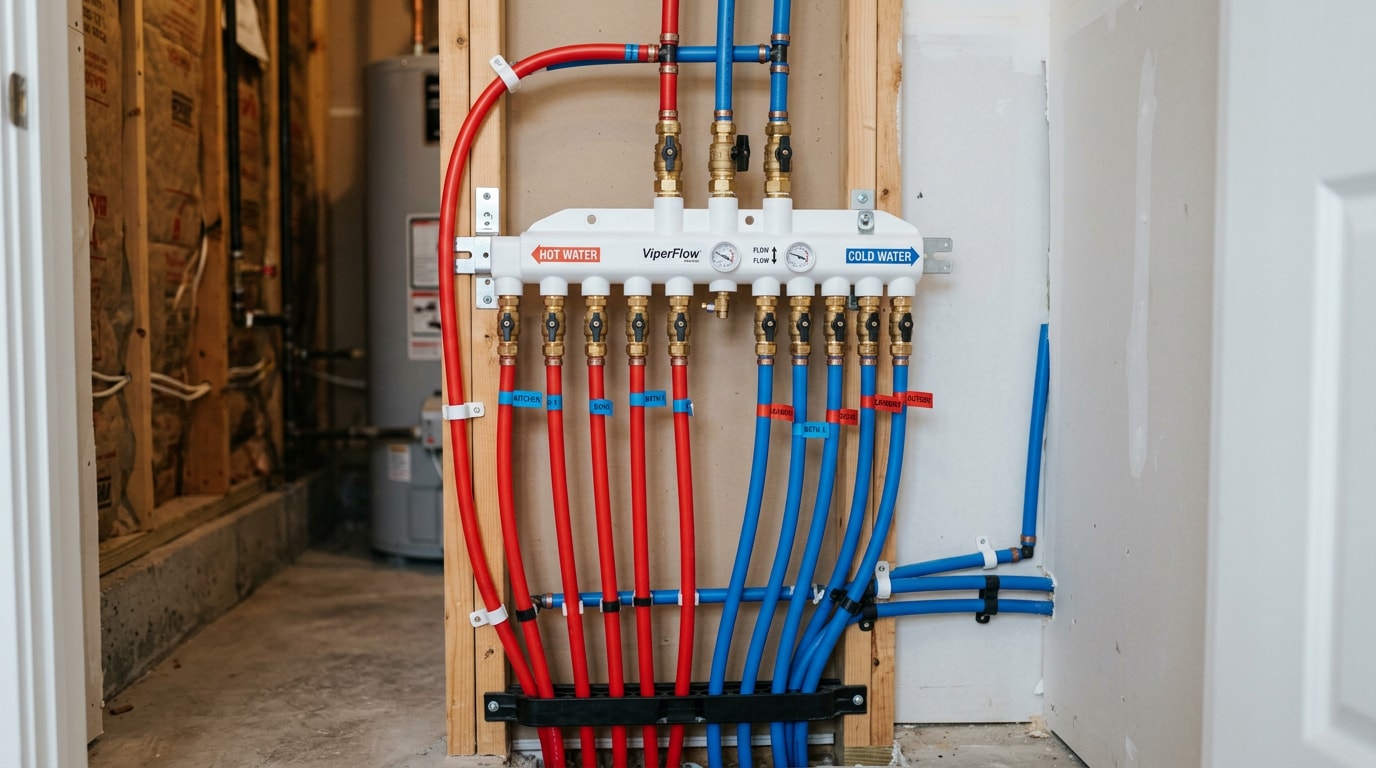
A plumbing manifold is a central water distribution hub that feeds individual supply lines directly to each fixture in a home, similar to how a breaker box sends electricity to separate circuits instead of one shared wire. Instead of tapping fixtures off a single trunk line, a manifold system gives each sink, shower, and appliance its own dedicated run back to the source.
This setup is almost always paired with PEX home-run plumbing rather than the older branch-and-tee copper layouts still common in pre-1990s Moncks Corner homes. PEX is flexible and can be bent, so fewer fittings are needed than for rigid piping, which means less pressure drop occurs in the lines, and it's a better insulator than copper and isn't susceptible to rust. Because the manifold is the control point for the whole system, it's sometimes called the home's water distribution hub.
New-construction neighborhoods around Moncks Corner and the broader Berkeley County area increasingly ship with manifold-based PEX systems already installed, and homeowners repiping older houses are choosing the same setup for the added control it offers. If you're weighing a full repipe, our water line replacement services page breaks down what a manifold conversion typically involves.
How Does a Manifold Plumbing System Work?
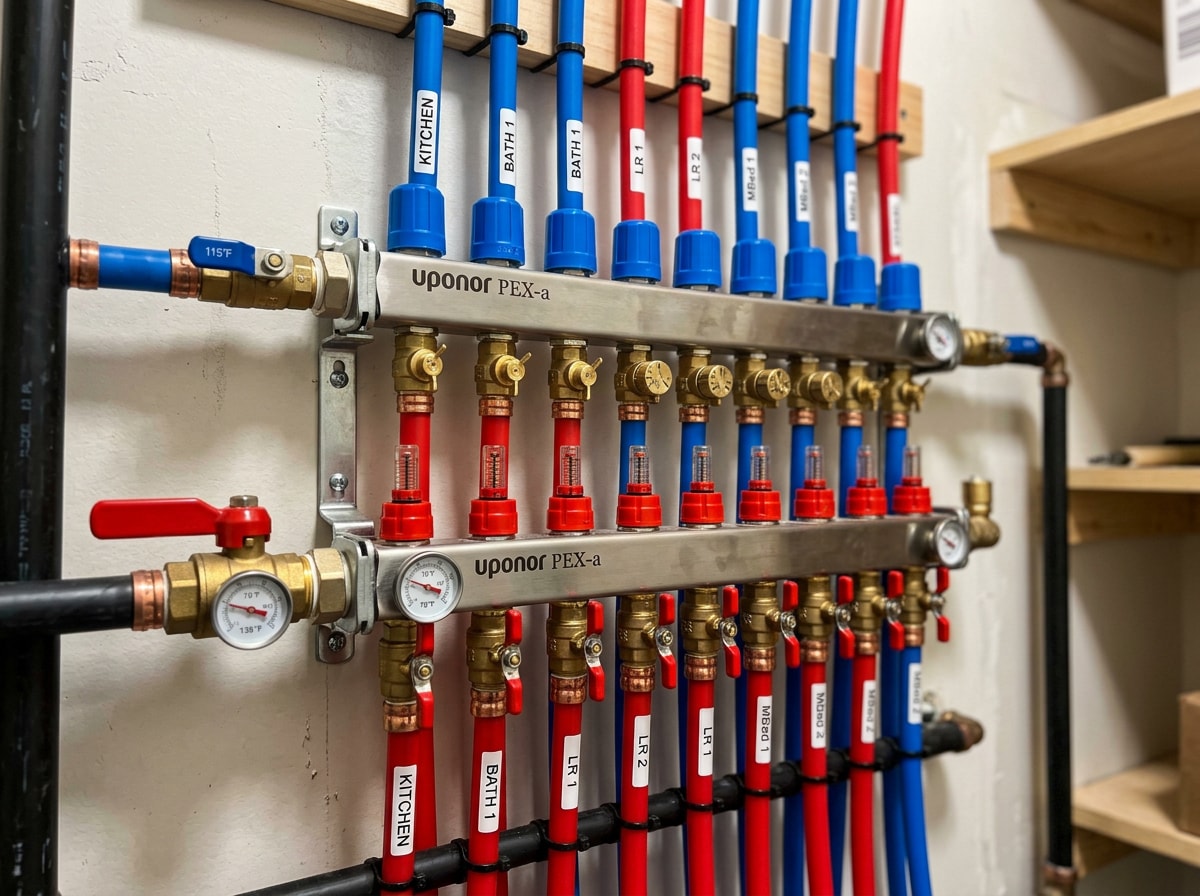
A PEX manifold includes separate manifold chambers to serve hot and cold water lines, with the cold-water manifold fed from the main water supply line and the hot-water manifold fed from the water heater. Rather than water traveling through a shared trunk and branching off at tees, each fixture gets its own continuous line, often called a home-run system. A large-diameter main water line feeds the manifold, and smaller lines run from the manifold out to each individual fixture.
You'll typically find the manifold installed in a utility room, garage, or basement near where the main water line enters the house, since that's the most practical place to split hot and cold water into dozens of individual runs. Plumbing manifolds are mounted in a convenient, accessible location, such as a basement wall or a service closet, to allow access for shutting off individual fixtures. Because each port has its own valve, a plumber can shut off water to one bathroom or one appliance without cutting water to the entire house.
Manifolds reduce the amount of piping and fittings in a system, speed up installation, and help balance water pressure throughout a home , according to the U.S. Department of Housing and Urban Development's residential PEX design guide. That balancing effect is part of why fixture-level control has become a selling point for Moncks Corner remodels and new builds alike.
Manifold Plumbing Pros and Cons
Manifold systems aren't automatically the "better" choice for every home. They come with real trade-offs worth weighing before committing to a conversion.
| Factor | Manifold (Home-Run) System | Trunk-and-Branch System |
|---|---|---|
| Pressure consistency | Stronger, since each fixture gets a dedicated line | Can drop when multiple fixtures run at once |
| Leak points | Fewer joints per run, lower leak risk | More tees and elbows hidden in walls |
| Shut-off control | Isolate one fixture at the manifold | Usually requires shutting off the whole house |
| Upfront cost | Higher, due to more tubing and labor | Lower for simple repairs |
| Hot water delay | Minimal near the manifold, longer on distant runs | Varies by trunk length |
| Wall/ceiling access | More intrusive during installation | Less disruptive for small repairs |
Because each fixture has a dedicated line running straight back to the manifold, homeowners generally notice steadier water pressure and faster hot water response at fixtures close to the hub. Fewer connection points along each run also means fewer opportunities for leaks compared with a maze of branch fittings, and an individual shut-off at the manifold makes isolating one fixture simple when something does go wrong.
The trade-off is cost and disruption. Installing a manifold system runs higher than a basic trunk-and-branch repair because of the added PEX tubing, the manifold unit itself, and labor to route individual lines to every fixture. Installation is also more intrusive, often requiring more wall or ceiling access during a repipe, and fixtures located far from the manifold can still experience a slight hot water delay.
What Does a Manifold Plumbing System Cost?
Pricing for a manifold conversion depends on home size, fixture count, wall access, and whether it's part of a full repipe or a standalone upgrade. Material costs for the manifold itself are a small piece of the total; most of the expense is labor, PEX tubing, and any drywall or flooring work needed to route lines to each fixture.
Rather than quote a single number that won't hold up across different homes, the more useful approach is a walk-through estimate. A plumber should count your fixtures, inspect your existing pipe material, and check wall access before giving you a firm price. If you want an apples-to-apples number for your own Moncks Corner home, request a free estimate and get a written quote based on your actual layout instead of a generic average.
Signs You Need Manifold Repair or Replacement
Common warning signs include fluctuating water pressure, visible leaks or cracks around the manifold body, corrosion at the fittings, and noticeably reduced flow to certain fixtures.
- Water pressure that changes when a single fixture is used
- Visible moisture, staining, or dripping near the manifold enclosure
- Corrosion or mineral buildup at valve connections
- One fixture losing flow while others work fine
- A noticeable drop in hot water speed at fixtures that used to run fast
If you're seeing more than one of these at once, it's worth having a plumber inspect the manifold itself rather than just the fixture acting up. Our plumbing leak detection and plumbing pipe repair teams see this pattern often in older Berkeley County homes where corroded copper or polybutylene feeds into a newer manifold setup.
Is a Manifold the Right Upgrade for Your Home?
Whether a manifold setup makes sense depends less on what's trendy and more on your home's age, layout, and your plumbing pain points.
A manifold tends to pay off if you're:
- Already dealing with frequent pinhole leaks in old copper or galvanized pipe
- Planning a whole-home repipe anyway
- Opening up walls for a remodel
- Wanting fast, fixture-level shut-off access
- On a private well and want to isolate problem lines without losing pressure elsewhere, which pairs well with our well pump service
A simpler fix might be better if:
- Cost control matters more than isolating individual fixtures
- You only have one or two fixtures causing trouble
- Adding a few extra shut-off valves to your existing trunk-and-branch system solves the real problem without a full conversion
Hiring a Professional for Manifold Installation in Moncks Corner, SC
Picture a typical older Moncks Corner home: original copper or polybutylene piping from the 1980s, a handful of corroded fittings, and a homeowner tired of pressure drops every time someone runs the dishwasher. KO Plumbing is led by David, who brings 13 years of hands-on plumbing experience, and as a single owner-operated business, customers work directly with the person doing the job. That means the same person who inspects your pipe material and fixture count is the one running the lines and pressure-testing the connections before closing up walls.
The basic replacement steps are straightforward in concept:
- Shut off the main water supply
- Remove the old manifold or branch fittings
- Install the new manifold in an accessible location
- Run individual home-run lines to each fixture
- Pressure-test every connection before closing up walls
What's harder to do safely without experience is sizing the lines correctly, meeting South Carolina plumbing code, and catching a slow leak before it's hidden behind finished drywall. Our plumbing code guide for Hanahan, SC covers permit and licensing requirements that apply across much of the Lowcountry, including Berkeley County.
DIY installation can save on labor costs upfront, but it often risks code violations, voided warranties, and leaks that surface months later behind finished walls. The South Carolina Department of Labor, Licensing and Regulation administers the state's licensing system and maintains the public database through which a plumber's license status and classification can be confirmed. You can verify a contractor's license through the state's official verification portal before signing any repipe contract.
PEX tubing used in manifold systems is manufactured to ASTM standards covering crosslinked polyethylene tubing and the hot- and cold-water distribution systems built from it , which is part of why a licensed plumber checks material grade before installing a manifold conversion.
If you're in Berkeley County, visit our Moncks Corner service area page to see the neighborhoods we cover, browse our full plumbing services lineup, or head to our homepage for more on how we work. When pressure drops, leaks appear, or you're ready to plan a repipe, get a free estimate and have a licensed plumber walk the job with you before anything gets opened up.
FAQ
What are the signs my PEX manifold needs replacing?
Watch for fluctuating water pressure, visible leaks, or cracks forming in the manifold body itself. Any of these signs warrant a professional inspection before the issue spreads to connected fixtures.
Can I replace a PEX manifold myself?
Professional installation is recommended. A licensed plumber ensures code compliance and keeps manufacturer warranty protection intact, while DIY manifold work risks both down the line.
Do manifold plumbing systems deliver hot water faster?
Generally, yes. Dedicated lines running straight to each fixture mean faster hot water delivery than shared trunk lines, though distance from the manifold still affects how quickly water arrives.
Do I need a manifold for a PEX plumbing system?
A manifold isn't strictly required for a PEX repipe, but it's the standard, code-friendly approach for whole-home installations and makes future repairs and shut-offs far simpler to manage.
How much does it cost to install a manifold system?
Cost depends on home size, fixture count, and whether it's part of a larger repipe. Because pricing varies so much by layout, the most reliable way to budget is a written estimate based on your specific home rather than a generic average.
Does a manifold system work with well water homes?
Yes. Manifold systems work with private well setups, though pressure tank sizing and well pump output need to be accounted for during design. A plumber familiar with both well systems and manifold plumbing should size the system together rather than treating them separately.