Quick Answer: Why Your P-Trap Is Leaking in Pinopolis, SC
A p-trap leaking in Pinopolis, SC is usually caused by a loose slip-joint nut, a worn or misaligned washer, a cracked plastic fitting, corrosion, or a trap that no longer sits level under the sink. Start by hand-tightening both slip nuts and checking washer position before assuming a full replacement is needed.
Our crews at KOP Plumbing field this exact call across Berkeley County every week, and nine times out of ten the fix is simpler than homeowners expect. This guide walks through diagnosing a leaking sink trap, the most common repair fixes, and when it makes more sense to call a local Pinopolis plumber than keep troubleshooting alone.
Find (Diagnose) the Leak
Before taking anything apart, figure out exactly where the water is coming from. Common leak points include:
- Slip-joint nuts at the tailpiece and trap arm
- The trap washer itself
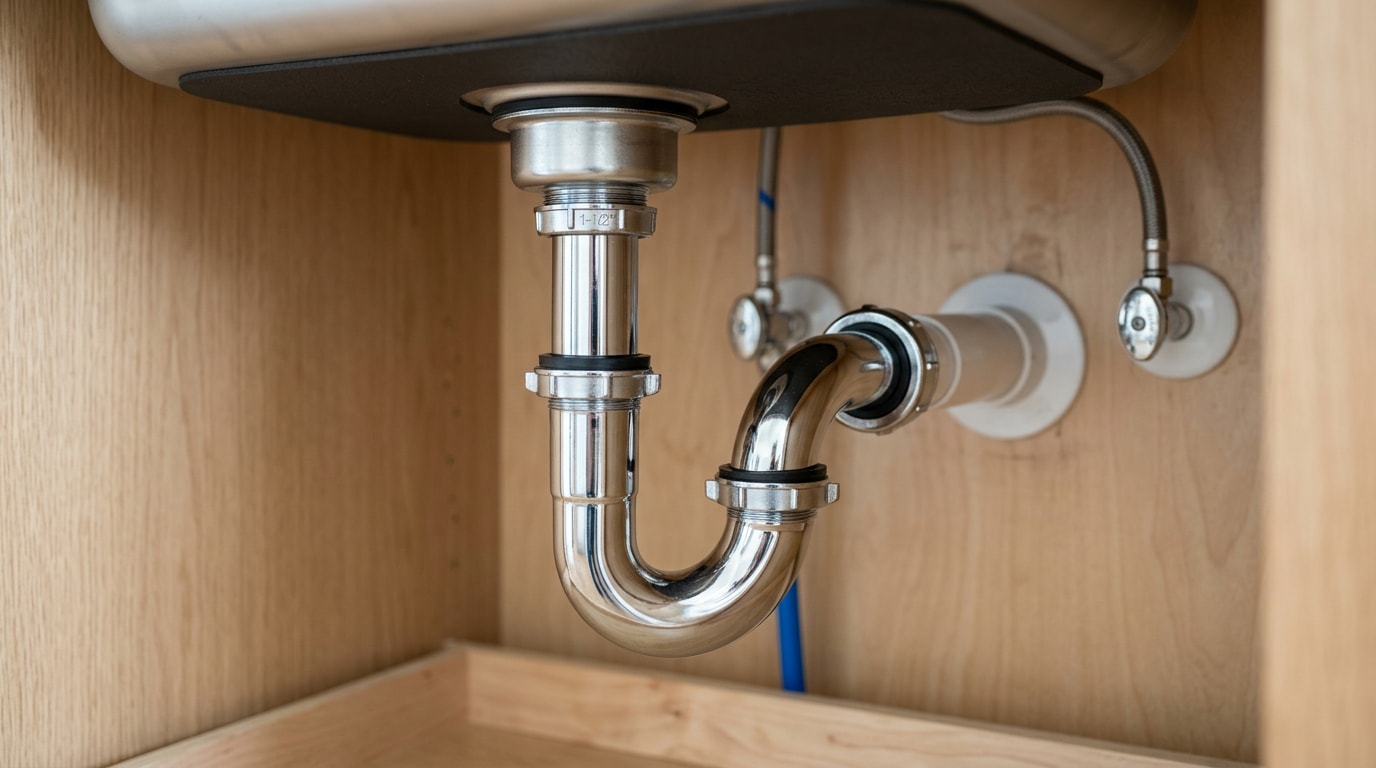
- The trap bend (the curved part of the pipe)
- The trap arm connection at the wall
- Cracks in plastic fittings or corroded metal pipe walls
Wipe every joint dry with a paper towel, run the faucet, and watch closely. Drips travel downward before they fall, so the first wet spot you see may not be the actual leak location. Isolate each joint one at a time until you find the real source.
If the leak traces back to older galvanized or cast-iron drain lines rather than the trap itself, a plumbing pipe repair specialist can check the full system instead of just the fitting under the sink. When the source still isn't obvious after checking every joint, professional leak detection can pinpoint it without tearing into walls or cabinetry.
Common Causes of a Leaking P-Trap
Most p-trap leak causes trace back to one of four root issues. Knowing which one you're dealing with saves time, since a new washer won't fix a cracked nut, and a quarter-turn won't fix a trap that was sized wrong from the start.
Improper Installation
Installing a p-trap correctly takes more care than it looks. Internal washers need their beveled edge facing the right direction, and pipes must be measured and cut to fit rather than forced together. A reversed washer often shows up as a slow leak weeks after the original work was done.
Corrosion
Some trap materials corrode faster than others, depending on the corrosivity of the waste water and the thickness of the metal itself. Acidic or mineral-heavy water is known to dissolve metal plumbing over time, which is why university water-quality programs advise homeowners on well water to watch for this specifically. Corrosion is caused when water reacts with and dissolves metal plumbing, which can add toxic levels of metals to the water and corrode pipes and joints, leading to pinhole leaks in extreme cases. White or orange crust on under-sink pipes often means corrosion, not a loose nut, is the real problem.
Over-Tightened Trap Compression Nut
Over-tightening a slip nut is one of the most common causes of a p-trap leak. Manufacturers warn against cranking these nuts down hard because excess torque can crack plastic threads, and even a metal compression nut can fracture if forced past hand-tight. A cracked compression nut almost always needs replacing, not retightening.
Improper Fit
If the pipes are too large or too small for the washers and nuts installed, a leak is likely no matter how well everything is tightened. A wrong-size trap or pipe mismatch is also the most common reason a leak returns after a repair that seemed to work. If tightening doesn't hold, measure before replacing anything.
Why Code Requires Your Trap to Sit Level
This part rarely gets mentioned in general p-trap guides, but it explains a lot of "mystery" leaks. Plumbing code doesn't just require a trap, it requires the trap seal to stay a specific depth. The water columns on both sides of the trap have to stay level with each other, or the seal gets shallower and the fitting is more prone to losing its grip at the joints. Each fixture trap shall have a liquid seal of not less than 2 inches and not more than 4 inches, except where a deeper seal is found necessary by the authority having jurisdiction.
Traps shall be set true with respect to their liquid seals, and the liquid seal that forms the trap barrier is the maximum vertical depth of liquid that a trap will retain, measured between the crown weir and the top of the dip of the trap.
In practice, that means a trap installed slightly off-level is fighting physics from day one, which is why so many "tightened it and it's still dripping" calls trace back to alignment, not torque.
How to Tighten a Loose P-Trap Connection
Most p-trap leaks start, and end, right here. Compression nuts are designed to be hand-tightened; done correctly, that alone makes the trap watertight.
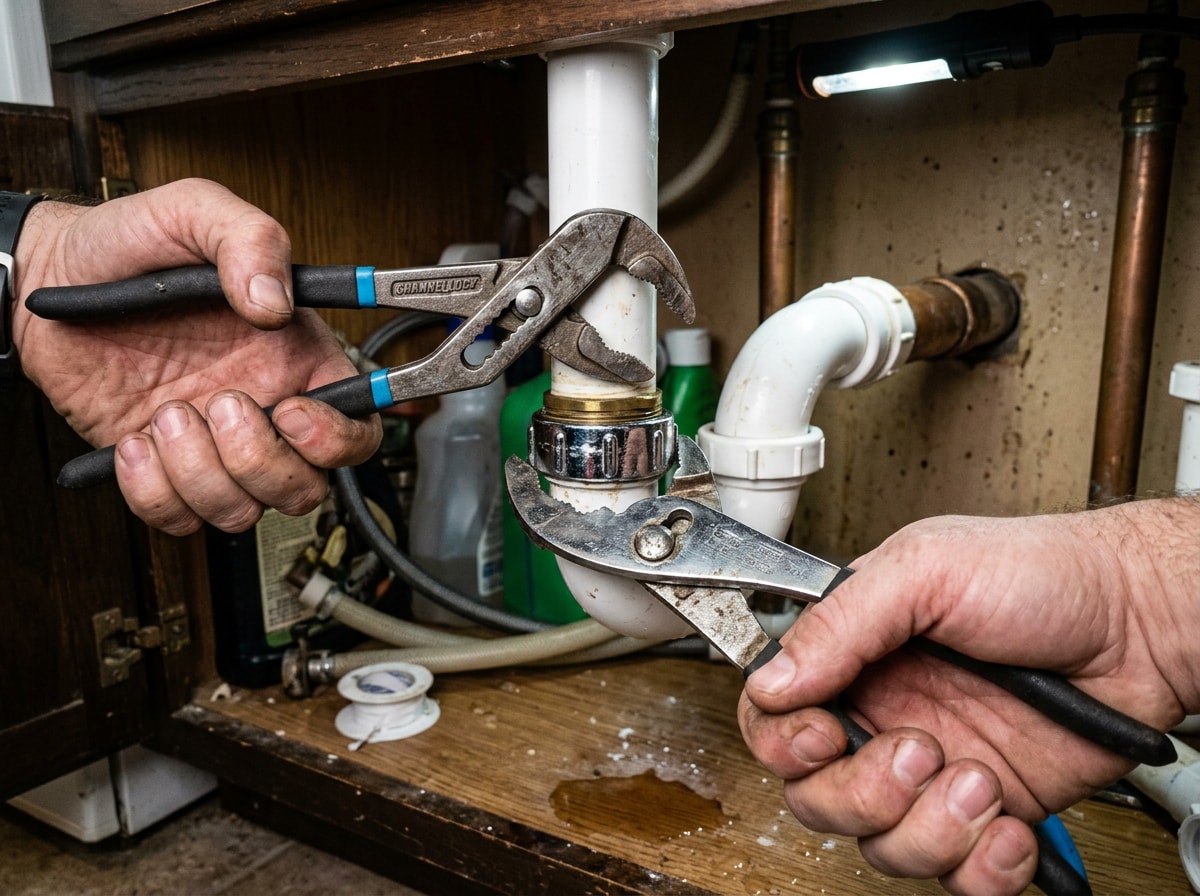
If the connection still weeps after hand-tightening, use slip joint pliers, but use two pairs, not one. Hold the pipe steady with one pair while turning the nut with the other. Twisting without holding the pipe steady can torque the whole connection out of alignment, creating a new leak even as you fix the old one.
Slip-joint connections use a plastic nut over a rubber or neoprene washer and rarely need much force: hand-tight, then a quarter-turn with pliers, is the standard most repair guides recommend. Going further almost always does more harm than good.
Stop a Leak by Disassembling the Trap
When tightening alone doesn't stop the drip, take the connection apart. Putting it back together usually reveals the real problem: often the pipe isn't sitting straight, the washer isn't fully seated, or the trap arm is cut too short to reach the wall fitting.
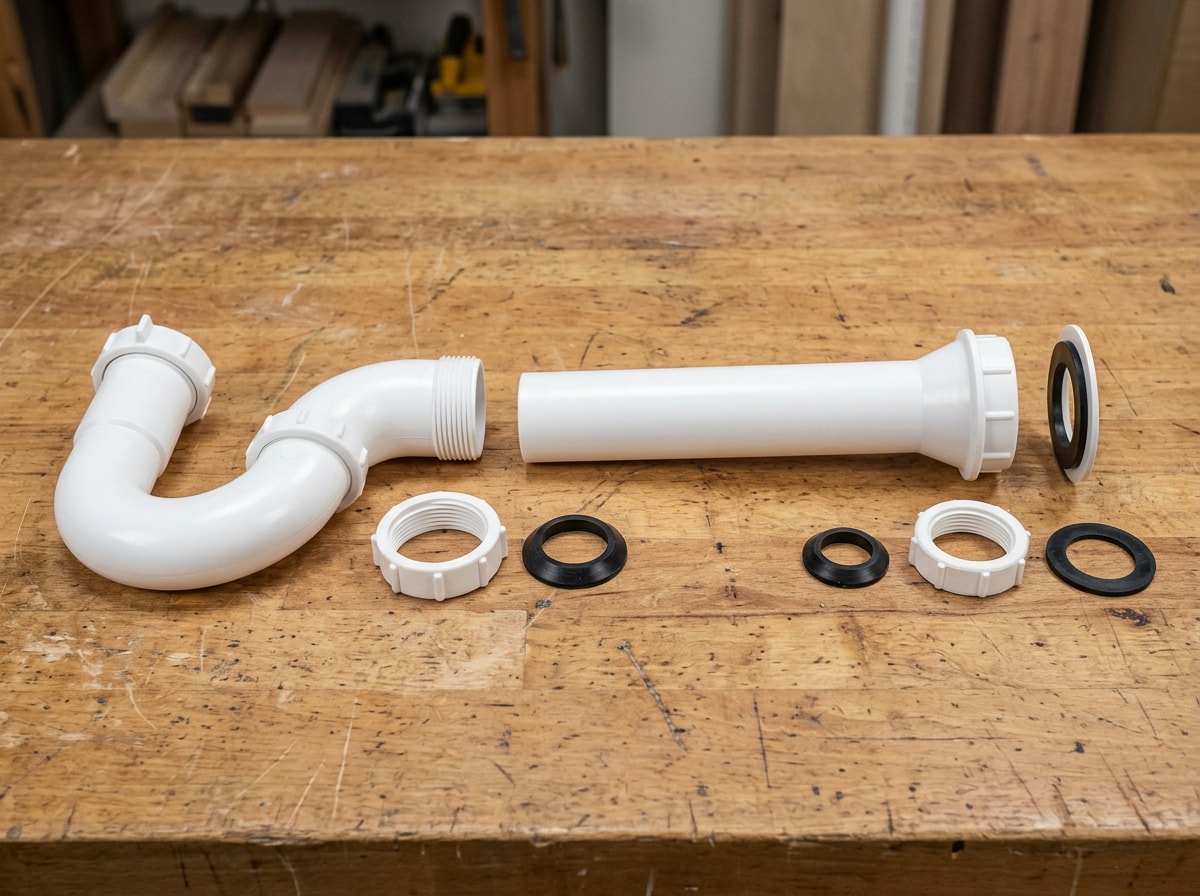
Check the washer itself. It's a tapered plastic ring that should sit snugly inside the female side of the joint.
- If it went in at an angle or upside down, reseating it correctly often stops the leak right away.
- If it's cracked, nicked, or hardened with age, replace it before reassembling.
- Reusing a damaged washer almost guarantees the leak returns.
How to Replace a Sink P-Trap
Before buying parts, confirm replacement is actually the right move. Look for cracked plastic, visible corrosion, damaged threads, or washers that have gone flat and hard. None of those get fixed by tightening.
If replacement is the answer, the swap is straightforward:
- Shut off the water supply and set a bucket under the trap.
- Loosen both slip nuts, one at the tailpiece and one where the trap arm meets the wall or drain stub.
- Pull the old trap free.
- Install a new one of the same diameter, making sure every washer's beveled edge faces the right direction.
- Run water and check every joint for weeping before closing the cabinet back up.
Replacement is usually faster and more reliable than another repair attempt when the old trap is cracked, heavily corroded, or has already been patched once. A basic PVC trap kit costs little and installs in well under an hour for most kitchen or bathroom sinks. If the catch basin or drain line downstream is also showing age, it's worth a look while you're already under the sink, something we cover in our catch basin drain installation guide for Pinopolis.
Repair or Replace?
Not every leak needs a new trap, and not every leak is worth repairing twice. Use this quick framework:
| Factor | Repair | Replace |
|---|---|---|
| Cost | Washer: $2–$5 | Full PVC kit: $10–$25 |
| Time | 10–15 minutes | 20–30 minutes |
| Trap condition | Newer, no visible damage | Corroded, cracked, or already patched |
| Leak history | First occurrence | Leaked more than once after fixes |
If you're reaching for pliers a third time on the same joint, that's your answer. A plumbing leak repair professional can also confirm whether the trap, or something further down the line, is the real source.
When to Call a Plumber
Some situations call for more than a wrench. Bring in a licensed plumber if:
- The leak returns repeatedly after DIY fixes
- You notice a sewer gas smell near the cabinet
- You spot mold or rot on the cabinet floor
- The leak is coming from a joint that isn't a simple slip-nut connection
Sewer gas exposure isn't just unpleasant. Hydrogen sulfide gas causes a wide range of health effects, and workers are primarily exposed by breathing it, with effects depending on how much hydrogen sulfide is breathed and for how long. If you smell it, don't wait. An emergency plumbing repair team serving Pinopolis and Moncks Corner can track down the source safely. Get a free estimate before the drip turns into cabinet damage.
FAQ
Why Does My Sink Trap Leak Only When the Sink Drains?
A leak that only shows up while draining points to the trap connections, washers, or the trap body itself, not a supply line. The trap only sees water and pressure while actively draining, so a drain-only leak almost always means a joint or washer needs attention rather than the faucet.
Why Does My P-Trap Keep Leaking Even After I Tighten It?
A drip that persists after tightening usually means the washer is worn or seated wrong, the trap body is cracked, or the pipe is misaligned, not that the nut needs more force. Go back to the disassembly steps above and reseat the pipe squarely; that usually resolves what tightening alone can't.
Can I Fix a P-Trap Leak Without Replacing the Whole Trap?
Yes, in most cases. The majority of slip-joint leaks are solved with a retightening or a fresh washer. Full replacement is only necessary when the trap body or trap arm itself is cracked, badly corroded, or has failed more than once despite proper repairs.
How Much Does It Cost to Fix or Replace a Leaking P-Trap?
A washer or slip nut typically costs a few dollars, and a full PVC trap kit runs roughly $10 to $25. Hiring a professional for the same job generally runs higher depending on access and complexity. Contact us for a free estimate specific to your Berkeley County home.
Does Pinopolis Well Water Make P-Traps Corrode Faster?
It can. Acidic or mineral-rich well water is more aggressive toward metal fittings than treated municipal water, which is part of why metal traps in rural Lowcountry homes sometimes show pitting or pinhole leaks sooner than expected. If you're on a well and seeing recurring corrosion, it's worth having the water tested alongside the plumbing repair.
This guide is maintained by the licensed plumbing team at KOP Plumbing, serving Pinopolis, Moncks Corner, and the greater Berkeley County area. Questions about a specific leak? Reach out through our contact page and we'll walk through it with you.