Searching for a leak diverter in Cross, SC usually means one thing: water is dripping somewhere it shouldn't be, and you need to stop the damage right now, not next week. A leak diverter is a temporary tool, not a repair, and knowing the difference can save your ceiling, your crawl space, and your water bill. Here's what a diverter actually does, what it costs, and exactly when to stop improvising and call a licensed plumber.
What Is a Leak Diverter?
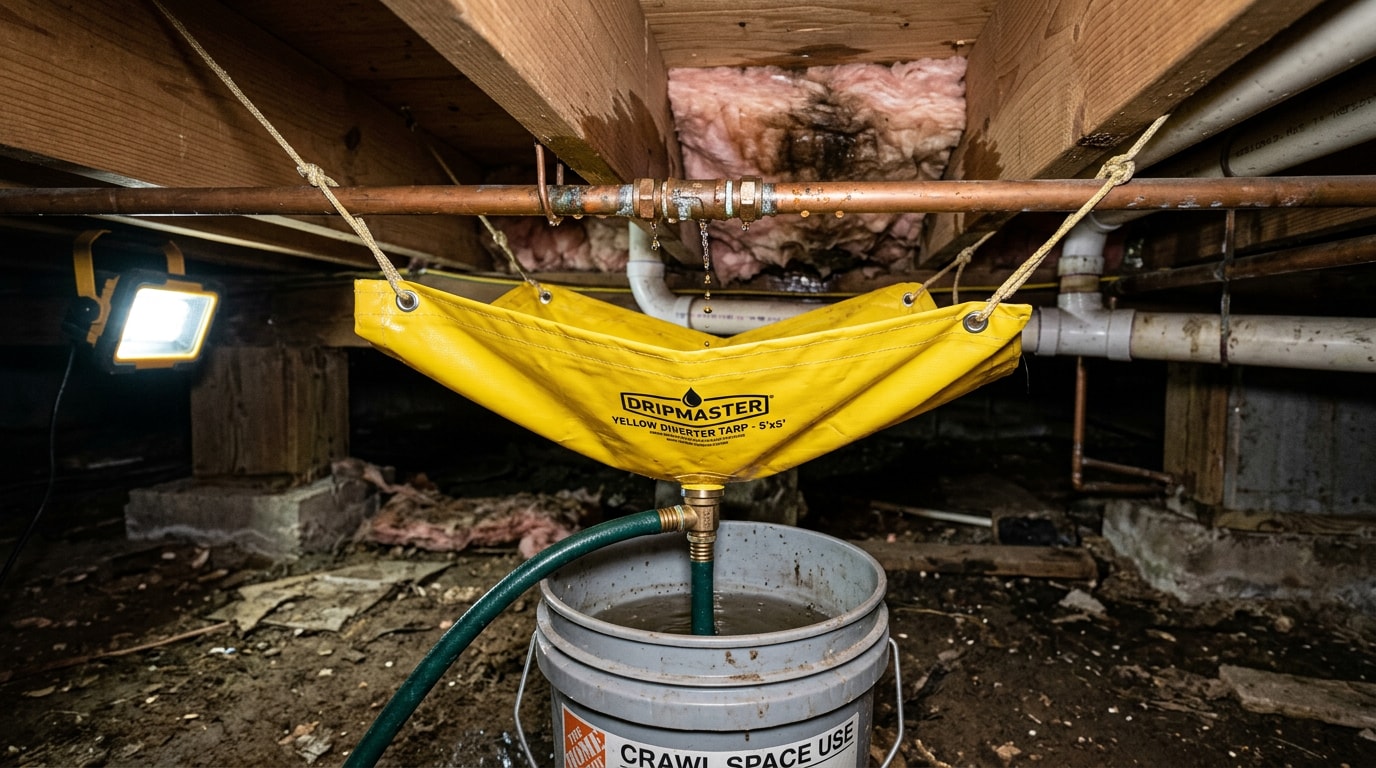
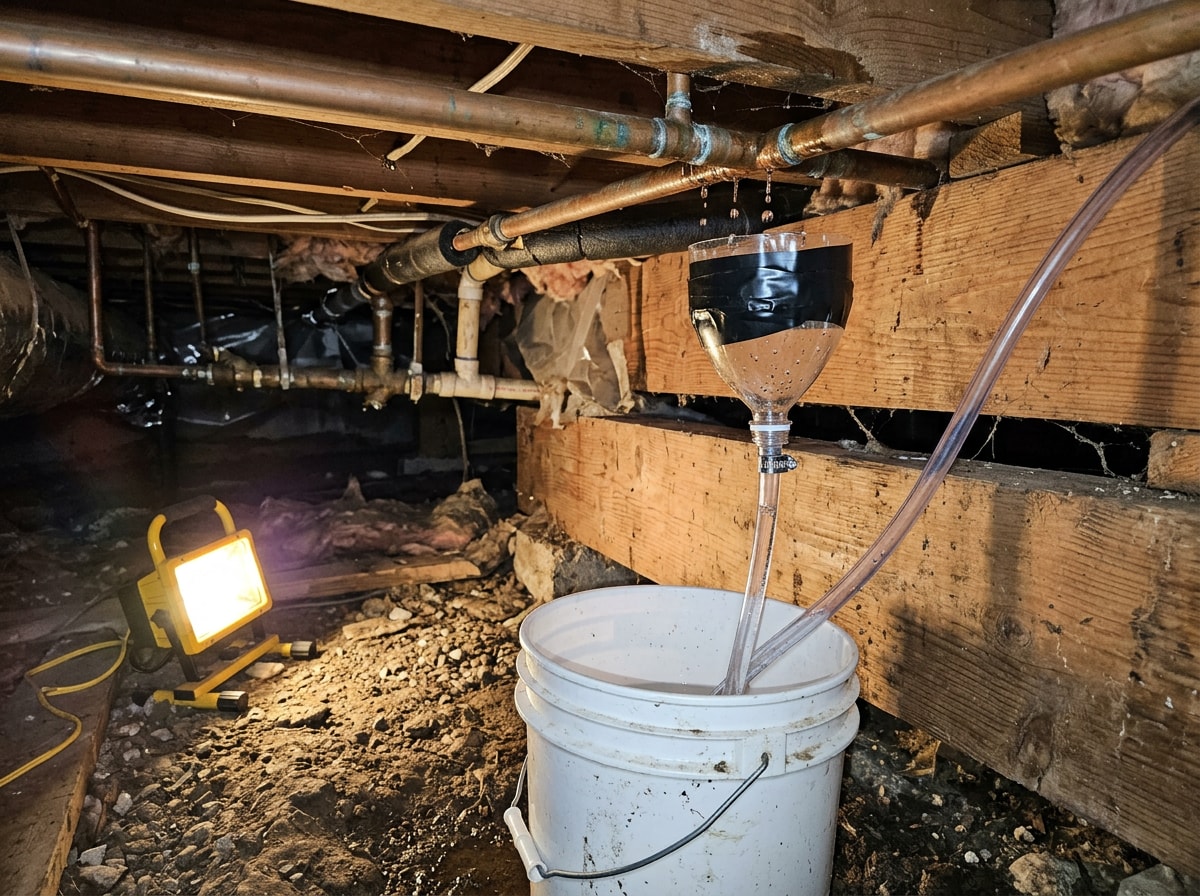
A leak diverter is a catch-and-redirect device, usually a tarp, pan, or cone-shaped funnel, that sits under an active leak and channels the water through a hose into a bucket, floor drain, or container instead of letting it soak drywall, insulation, or flooring. It's a stopgap, bought to buy you time between discovering a leak and getting it fixed. Homeowners in Cross and the rest of Berkeley County usually need one in one of three scenarios: a pipe leak behind a wall or above a ceiling, a water heater or well pressure tank starting to seep, or a sump pump discharge line that's overflowing faster than the pump can clear it.
Common Types of Leak Diverters
- Pipe drip diverters – cone or bucket-style catchers that wrap around or hang below a leaking supply or drain pipe, usually with a garden hose fitting on the bottom
- Ceiling drain tarps – suspended vinyl or poly sheets with a low point and hose connector, used when water is coming through a ceiling from a leak above
- Wall leak channels – rigid plastic troughs mounted to a wall to catch water running down from a roof or overhead pipe leak and route it to a sump or drain
- Water heater and tank drip pans – permanent catch pans installed under water heaters and pressure tanks, required in many attic and finished-space installations
When Cross, SC Homes Actually Need One
Cross sits in a part of Berkeley County where plenty of homes run on private wells, sit on crawl space foundations, and deal with heavy seasonal rain. That combination makes certain leak points far more common here than in a typical subdivision:
- Well pressure tanks and pitless adapters that develop slow leaks underground or in a well house
- Crawl space supply lines running through humid, hard-to-inspect areas where a small drip can run for weeks before anyone notices
- Water heaters in closets or attics, where even a small tank leak drips onto drywall and insulation before it's spotted
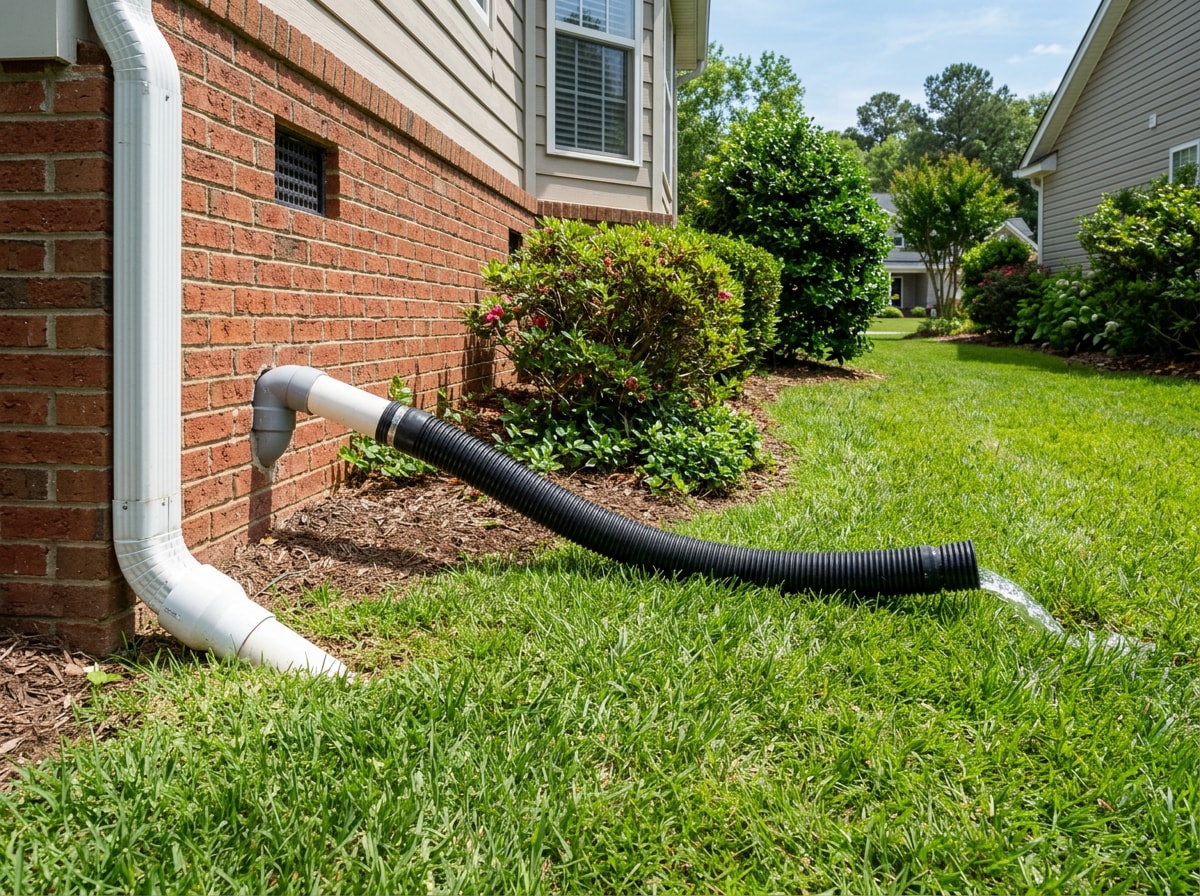
- Sump pump discharge lines that back up during heavy storms and send water back toward the foundation instead of away from it
If any of those sound familiar, a diverter buys you a day or two. It doesn't buy you a solution. For a full assessment of where water is actually coming from, plumbing leak detection finds the source instead of just catching the symptom.
DIY Leak Diverter: Step-by-Step
A basic pipe or ceiling leak diverter is a reasonable DIY move for a few hours while you wait for a plumber. Here's the short version:
- Shut off water to the affected line at the nearest shutoff valve, or the main if you can't isolate it.
- Position the diverter or tarp directly under the leak, with the low point or drain fitting centered under the heaviest drip.
- Attach a garden hose or tubing to the drain connector and route it to a floor drain, sump, or large container outside the work area.
- Secure the diverter with bungee cords, zip ties, or hanging straps so it doesn't shift as it fills with water.
- Check it every few hours until a plumber arrives. Containers fill faster than most homeowners expect.
This works fine for a slow drip. It does not work for a pressurized line failure, a split pipe, or anything spraying rather than dripping. In those cases, shut the water off completely and call for emergency plumbing repair instead of trying to catch it.
Leak Diverter Cost Comparison
| Option | Typical Cost | Best For | Limitation |
|---|---|---|---|
| Basic bucket + tarp setup | $15–$40 | Slow drips, short-term | Needs constant monitoring |
| Commercial pipe/ceiling diverter kit | $50–$150 | Moderate leaks, 1–3 days | Still temporary |
| Permanent drip pan (water heater/tank) | $20–$60 installed with new unit | New installs, attics, closets | Only catches, doesn't prevent |
| Professional leak repair | Varies by cause and access | Permanent fix | Requires a licensed plumber |
A diverter is cheap because it's not solving anything. The actual cost of a leak is almost never the diverter, it's the drywall, flooring, insulation, and mold remediation that pile up the longer the source goes unfixed.
Why a Temporary Diverter Isn't a Fix
It's tempting to leave a working diverter in place and call it handled, especially if the drip has slowed down. Two things work against that plan.
First, household leaks can waste nearly 1 trillion gallons of water annually nationwide , according to the EPA's WaterSense program, and that waste adds up fast on a single uncaught pipe leak behind a wall. Second, moisture has a clock on it. The CDC notes that anything wet that can't be cleaned and dried out completely within 24 to 48 hours should be removed to limit mold risk, and a diverter that's catching water off a crawl space pipe for a week straight is keeping that whole area exactly as wet as if nothing were catching it at all.
In my years running service calls around Moncks Corner and out toward Cross, the diverters that cause the most damage aren't the ones that fail, they're the ones that work too well. Homeowners see a dry floor and assume the problem is solved, when the water is still finding its way into the subfloor or insulation above the catch basin.
If your home runs on a private well, it's also worth having your water tested periodically, since routine well maintenance and water testing of private drinking water wells is the responsibility of the homeowner according to Clemson Cooperative Extension, and a slow leak near a wellhead or pressure tank can affect both supply and water quality over time.
Rain Diverter vs. Plumbing Leak Diverter: Don't Confuse the Two
"Leak diverter" gets used for two unrelated things, and it's worth knowing which one you actually need:
- A rain diverter (also called a roof or gutter diverter) is a piece of metal flashing installed on a roofline to redirect rainwater away from a doorway or wall junction. It's a roofing fix for exterior water.
- A plumbing leak diverter is the indoor catch-and-redirect tool covered in this guide, used for pipe, tank, and fixture leaks inside the home.
If your water problem is coming from the roof itself rather than a pipe, tank, or fixture, you're looking at a roofing contractor's scope of work, not a plumber's. If it's an indoor supply line, drain, water heater, or well system issue, that's squarely plumbing territory, and it's the more common cause of "leak diverter" searches from homeowners dealing with an active indoor drip.
When to Call a Licensed Plumber
A diverter is a holding pattern. Call a plumber once:
- The leak is from a pressurized supply line rather than a slow drain or condensation drip
- You can't identify the source after checking visible pipes, the water heater, and under fixtures
- The leak is near electrical wiring, a panel, or a finished ceiling
- Water has been dripping for more than a day despite the diverter catching it
- You're on a well system and suspect the leak is at the pressure tank, pitless adapter, or buried line
South Carolina also regulates who can legally perform the repair. Residential plumbing work exceeding $500 requires a license under state rules administered by the Residential Builders Commission, so anything beyond a minor fixture swap should go to a licensed contractor rather than an unlicensed handyman, both for code compliance and because unlicensed work can complicate insurance claims if the leak caused damage.
For pipe leaks, plumbing pipe repair and plumbing leak repair cover the permanent fix. For tank and heater leaks, water heater repair and water tank repair handle those specifically. If the leak traces back to your well system, well pump service is the right call, and for sump discharge backups, sump pump repair gets water moving away from the foundation again.
Homeowners dealing with a related fixture leak may also find this guide on bathroom sink leaking underneath useful, since under-sink leaks follow a similar diagnose-and-divert pattern before the permanent fix.
FAQ
What is a leak diverter used for?
A leak diverter catches water from an active pipe, ceiling, or tank leak and routes it through a hose into a bucket or drain, protecting the area below while you wait for a permanent repair. It doesn't stop the leak itself.
Can I use a leak diverter instead of calling a plumber?
Only as a short-term measure for a slow drip. A diverter doesn't fix the source, and leaving one in place for more than a day or two just relocates where the water sits instead of solving the problem.
How much does a leak diverter cost?
A basic DIY setup with a tarp, hose, and bucket runs about $15 to $40. Commercial diverter kits with built-in drain fittings typically cost $50 to $150. The actual repair cost depends on what's causing the leak.
Does a leak diverter stop mold from forming?
No. A diverter only redirects visible dripping water. Moisture trapped in insulation, subfloor, or drywall around the leak point can still support mold growth within the same 24 to 48 hour window regardless of whether the drip itself is being caught.
Is a rain diverter the same as a plumbing leak diverter?
No. A rain diverter is roof flashing that redirects exterior rainwater away from a wall or doorway. A plumbing leak diverter is an indoor tool for catching pipe, tank, or fixture leaks. They solve completely different problems.
Who do I call for a leak near Cross, SC?
For plumbing-source leaks (pipes, water heaters, well systems, sump discharge), a licensed residential plumber should handle both diagnosis and repair. Get a free estimate to have the source identified and fixed rather than managed with a temporary catch setup.
---
About the Author: This guide was reviewed by David, owner and lead plumber at KO Plumbing, serving Cross, Moncks Corner, and the greater Charleston-area Lowcountry. David brings years of hands-on residential plumbing experience, including well system and crawl space leak calls throughout Berkeley County. See current projects or contact KO Plumbing directly for a leak assessment in Cross, SC.