Shower plumbing parts in Goose Creek, SC determine whether a dripping handle is a five-minute fix or a wall-opening repair. Most homeowners never see these parts until something fails, which is exactly what makes the next leak or temperature swing so confusing to diagnose. This guide breaks down every component, from the supply line behind the wall to the drain under your feet, so you know what you're dealing with before you call anyone.
Understanding the Shower Plumbing Layout
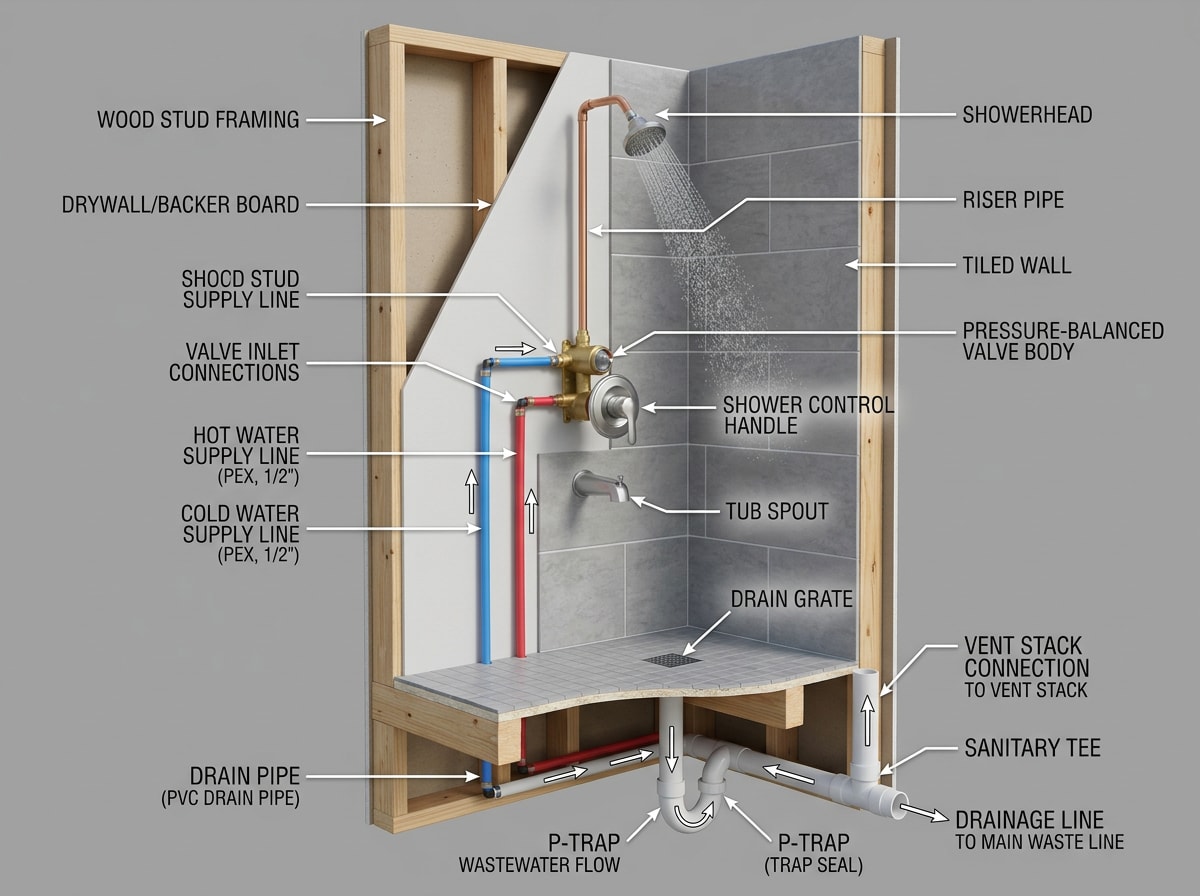
A shower system breaks down into three functional zones: supply, mixing and distribution, and drainage.
Supply lines bring hot and cold water to the wall. The valve mixes that water to the right temperature and sends it out through the showerhead or tub spout. Drainage carries used water away and keeps sewer gas from backing up into the bathroom.
Seeing a shower plumbing diagram makes this much easier to picture, since the parts aren't visible once a bathroom is finished and tiled. In Goose Creek, where plenty of homes were built before the 1990s, that supply zone often still runs on galvanized pipe instead of copper or PEX. Galvanized pipe corrodes from the inside, which gradually chokes off water flow and can limit which replacement shower plumbing parts actually fit without additional rework.
Understanding this basic layout before you call anyone, or pick up a wrench, makes the rest of this guide, and any conversation with a plumber, a lot more useful. For broader help once you've identified an issue, our plumbing services page covers repair and installation options across the Lowcountry.
Main Components of a Shower Plumbing System
Every shower, regardless of style or age, relies on four groups of shower plumbing components:
- Supply pipes bringing water in
- A valve that controls temperature and flow
- Outlets that release the water
- A drain system that carries it away
Knowing the shower parts names in each group makes it much easier to describe a problem accurately, whether you're troubleshooting yourself or explaining the issue to a plumber over the phone. The sections below walk through each group one at a time, starting with the pipes feeding the system.
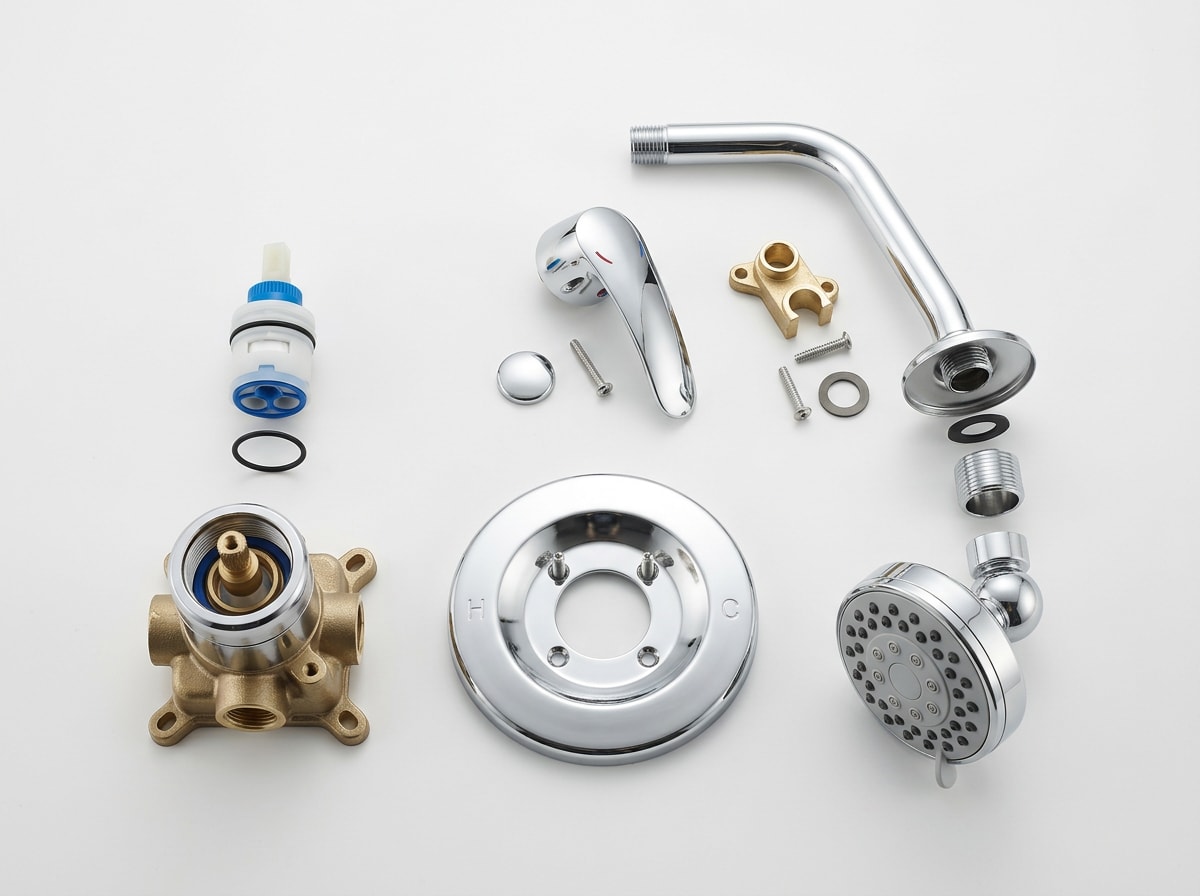
Water Supply Pipes
Water supply pipes carry hot and cold water from the main line to the shower valve, and the material matters more than most homeowners realize.
- Copper pipe has been the standard for decades and holds up well, though it's pricier to install.
- PEX pipe is now the most common choice in new construction and remodels because it's flexible, affordable, and resistant to freezing cracks.
- Galvanized pipe, found in many older Goose Creek homes, is steel coated in zinc that corrodes and narrows over the years.
That corrosion is often the real reason for weak shower pressure, even when every other shower plumbing part is in good shape. During diagnostic calls across Goose Creek and the surrounding Lowcountry, our licensed plumbers trace more low-pressure complaints back to corroded galvanized supply lines than to any single valve or cartridge issue. If a home still has galvanized supply lines, a plumber may recommend repiping sections with copper or PEX before investing in a higher-end valve or showerhead, since new fixtures won't fix a pressure problem caused by old pipe.
Shower Valves (Including Cartridge and Handle)
The shower valve is the control center of the entire system. It's the single component responsible for blending hot and cold water and keeping that temperature stable while you shower. Inside the valve body sits the cartridge, a cylindrical part that physically shifts to adjust the hot/cold mix whenever the handle turns. The handle itself is just the visible lever; the cartridge is what actually does the work.
There are three common valve types, and the differences matter more than most buying guides mention:
| Valve Type | Typical Cost Range | Scald Protection | Best-Fit Scenario |
|---|---|---|---|
| Basic mixing valve | $30–$80 | Minimal | Budget bathrooms, low-risk households |
| Pressure-balancing valve | $80–$200 | Moderate to good | Most homes, especially with kids or older adults |
| Thermostatic valve | $150–$400+ | Strongest, holds exact temperature | Multi-outlet showers, households with scald-sensitive users |
A pressure-balancing valve reacts to pressure changes, so a toilet flush elsewhere in the house won't scald someone mid-shower. A thermostatic valve goes further, maintaining a precise temperature regardless of pressure swings.
South Carolina plumbing permits are reviewed against the state-adopted International Plumbing Code, and the South Carolina Building Codes Council's adoption notice confirms which edition and modifications apply statewide. It's worth checking current requirements before choosing a replacement valve, since anti-scald rules can vary by jurisdiction and permit type.
Water Outlets: Showerhead and Shower Arm
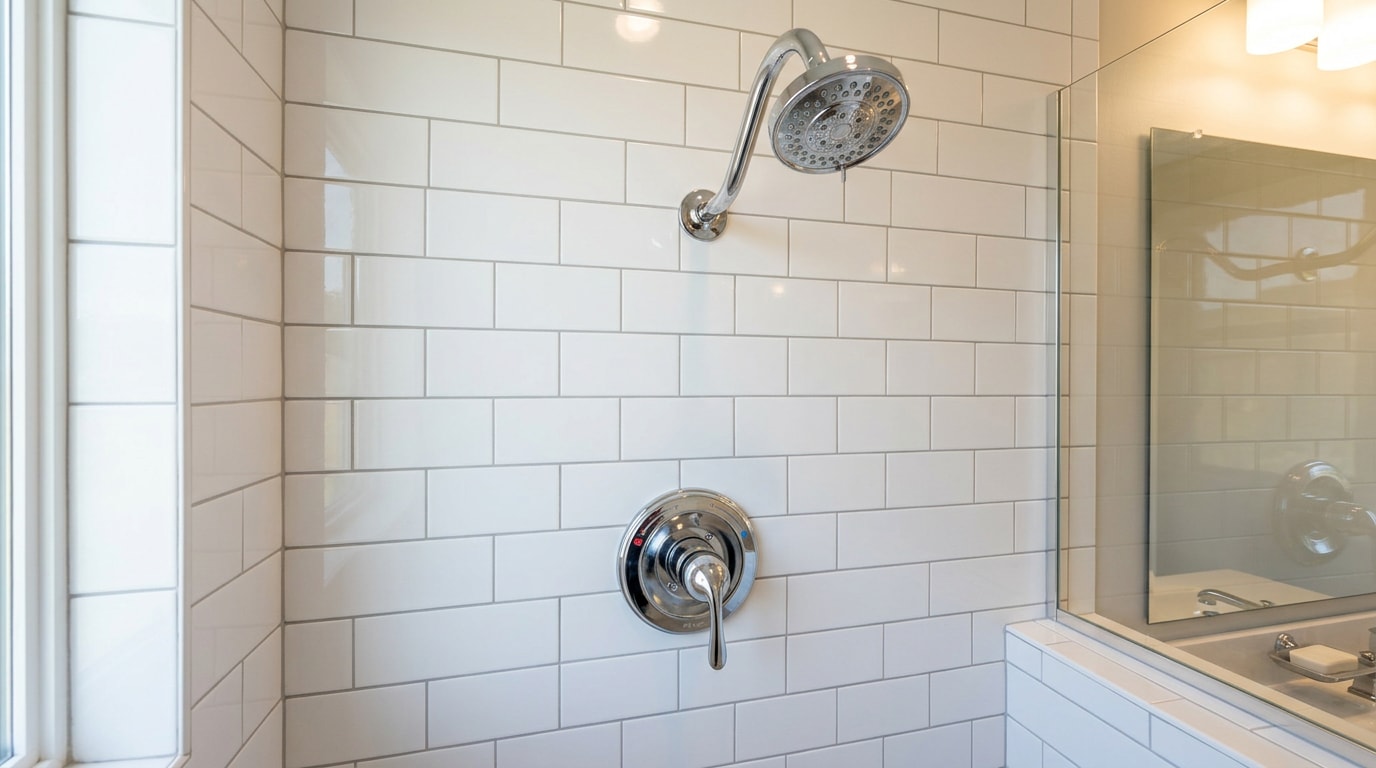
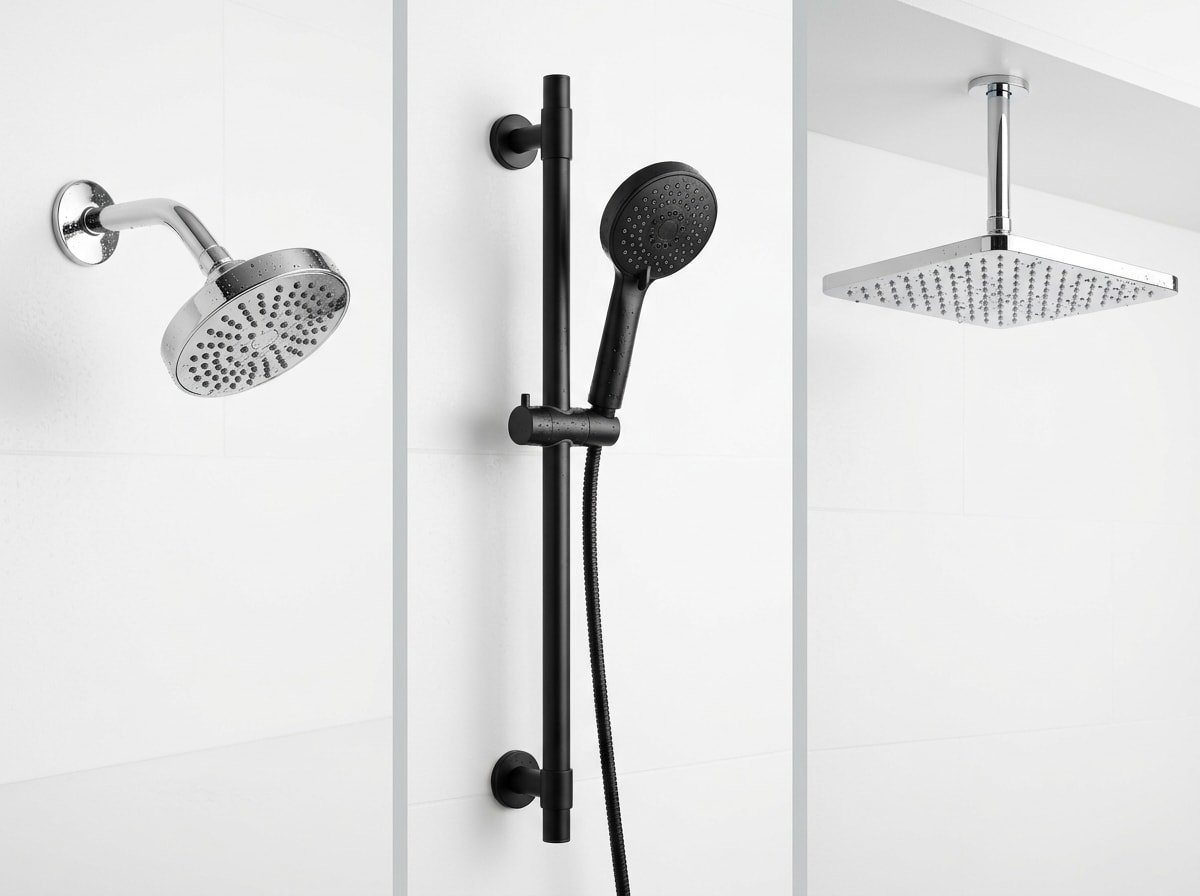
The showerhead is the part releasing water into the shower itself, and it comes in a few common styles, fixed, handheld, and rain-style, each attaching to a shower arm, the pipe extending from the wall. A shower flange, sometimes called an escutcheon, covers the wall opening where the arm exits for a clean, finished look.
If a tub spout is part of the setup, a diverter routes water between the spout and the showerhead, usually through a pull-up tab or a separate valve. A diverter that won't fully switch, leaving water dribbling from both outlets, is one of the more common minor repairs in older fixtures.
Shower Drain and Trap
Water exits through a drain strainer, a removable cover that catches hair and debris before it reaches the pipe below. Beneath that sits the P-trap, a curved section of pipe that holds a small amount of standing water to form the shower trap seal, blocking sewer gas from entering the bathroom.
If a shower drains slowly even after clearing visible debris, the issue sometimes traces back to venting rather than the trap itself. A vent pipe allows air into the drain line so water can flow freely instead of glugging. Plumbing codes set specific sizing and venting rules for traps, and the International Code Council's plumbing code resource is the model most South Carolina jurisdictions build their local requirements around, though local amendments can apply.
Visible vs. Hidden Shower Faucet Parts
Shower plumbing splits into two practical categories: visible shower parts you can see and touch (handle, trim, showerhead, flange) and concealed shower plumbing sealed inside the wall cavity (valve body, cartridge seat, rough-in valve, supply connections). This distinction determines whether a repair is a quick DIY fix or a job requiring wall access.
A wobbly handle or a leaking showerhead usually involves only the visible shower trim and can often be swapped without opening anything. A gradual pressure drop or a persistent drip behind the wall, though, usually points to the rough-in valve or a supply connection, parts no one can see or reach without cutting into tile or drywall. That second category is where DIY attempts tend to cause more damage than they fix, and it's usually the point where it makes sense to get a free estimate before opening anything.
If you're staring at a problem and can't tell which category it falls into, our shower repair and installation services page outlines what a typical diagnostic visit covers. Homeowners dealing with permit questions on a remodel may also want our isometric plumbing drawing guide for Goose Creek permit reviews.
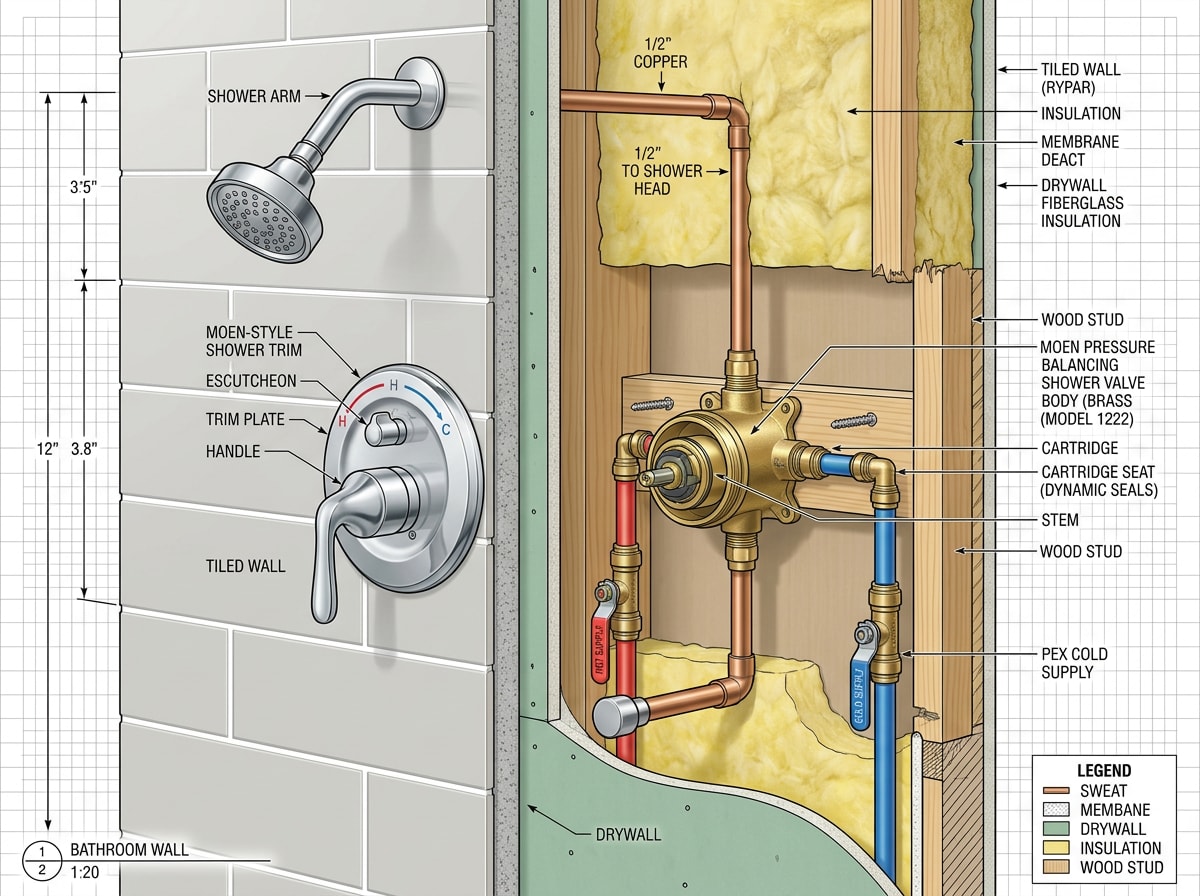
How Water Moves Through a Shower Faucet
Understanding the water flow path ties every part covered above into one sequence instead of a list of disconnected names. Here's how shower valve function actually plays out, step by step:
- Hot and cold water arrive separately through the supply lines.
- Both lines feed into the rough-in valve body mounted inside the wall.
- The cartridge shifts position as the handle turns, blending hot and cold to the set temperature.
- If a diverter is present, it routes the mixed water toward either the tub spout, the showerhead, or a handheld unit.
- Water exits through the chosen outlet and eventually drains through the strainer, P-trap, and out to the sewer or septic line.
Every shower, from a basic single-handle setup to a multi-head system, follows roughly this same path, just with more valves and outlets added for additional features.
FAQ
What Are the Main Parts of a Shower?
The main parts of a shower are the water supply pipes, the shower valve and cartridge, the outlet (showerhead, arm, and diverter), and the drain and trap assembly. Together these shower components move water from the supply line to the drain while controlling temperature and flow along the way. Homeowners researching repairs in the area can find more local guidance on our Goose Creek, SC service area page.
What Are Things in the Shower Called?
A few shower part names trip people up regularly. The escutcheon is the decorative plate covering a wall opening around a pipe or handle. The diverter switches water flow between outlets. The trap arm is the horizontal pipe section connecting the drain to the P-trap below the shower floor.
How Much Does It Cost to Replace a Shower Valve?
Cartridge replacement alone typically runs $150–$350 including labor, since it doesn't usually require opening the wall. A full shower valve replacement costs more, generally $300–$600, and can climb higher if tile work or wall access is involved. Getting an accurate number usually means having a plumber inspect whether the issue is the cartridge or the valve body itself.
How Often Should You Replace a Shower Head?
Most showerheads last somewhere between 6 and 8 years, though mineral buildup from hard water can shorten that lifespan noticeably. Homes with harder water in the Lowcountry may notice clogged spray holes or reduced flow sooner than that range suggests. The EPA WaterSense program sets flow-rate standards worth checking when shopping for a replacement, since newer efficient models can also lower water bills.
Can I Replace Shower Plumbing Parts Myself?
Visible parts like a showerhead, handle, or flange are usually safe DIY swaps if you shut off the water first. Anything behind the wall, the valve body, cartridge seat, or supply connections, is riskier to attempt without experience, since a mistake there can mean cutting into tile to fix a leak later.
Why Is My Shower Losing Pressure in an Older Goose Creek Home?
In homes built before the 1990s, weak shower pressure usually traces back to corroded galvanized supply pipe narrowing the flow path, not a worn showerhead or valve. Replacing the affected section with copper or PEX typically restores pressure where a new fixture alone would not.
If you're ready to stop guessing and get a straight answer on what's behind your wall, request a free estimate from the team at KO Plumbing SC and we'll walk you through exactly what needs fixing.